Google’s Universal Commerce Protocol (UCP) is reshaping online shopping with AI-led, zero-click commerce. Here’s what it means for businesses and marketers.

James Aitken
Jan 29, 2026
AI, Ecommerce, SEO, Google Updates, Future of Search
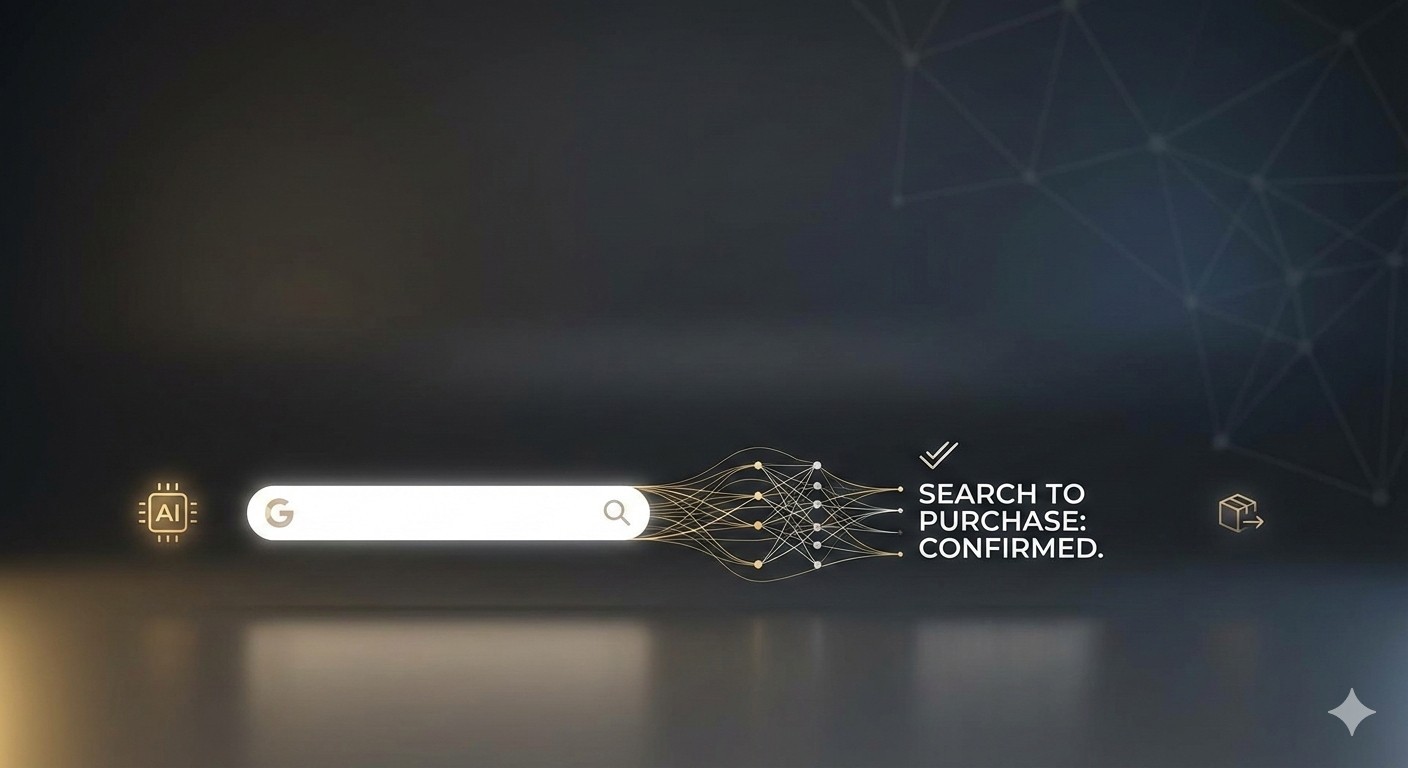
Online shopping hasn’t really changed in years. Search, click, browse, add to cart, abandon cart — repeat.
Google has just broken that cycle.
With the launch of Universal Commerce Protocol (UCP), Google is moving shopping directly into Search and AI interfaces. No checkout pages. No redirects. No traditional e-commerce journey.
This isn’t a small UX update.
It’s a fundamental shift in how digital commerce works
What Is Google’s Universal Commerce Protocol (UCP)?
Universal Commerce Protocol (UCP) is a new open standard designed to power AI-led, end-to-end shopping experiences.
Instead of sending users to retailer websites, UCP allows AI systems to connect directly to merchant infrastructure, including:
Product data and availability
Pricing and promotions
Checkout and payment processing
Post-purchase support
In simple terms, search becomes the store.
UCP builds on existing AI and payment frameworks and has been co-developed with major e-commerce platforms and retailers, meaning adoption is already happening — not theoretical.
What Actually Changes for Consumers?
The biggest change is where conversion happens.
With UCP, a typical purchase flow now looks like this:
A user searches for a product in Google Search or AI Mode
AI summarises options and answers follow-up questions
A retailer’s AI agent clarifies specifications or policies
Google surfaces a relevant offer
The user confirms the purchase inside Google
No carts.
No forms.
No switching between websites.
This is zero-click shopping in action.
Why This Time Is Different
Google has tried integrated commerce before — and failed.
Voice commerce never scaled.
Universal Cart lost momentum.
Shopping Actions couldn’t compete with marketplaces.
UCP is different for three reasons:
AI adoption is already mainstream
There’s no new behaviour required. Users are already searching this way.
Google owns high-intent traffic
Shopping queries already happen on Google, at massive scale.
Google isn’t building alone
UCP has been developed alongside retailers, platforms, and payment providers, removing the usual adoption barriers.
This isn’t Google asking users to change how they shop.
It’s Google inserting checkout into behaviour that already exists.
Business Agent and Direct Offers: The Real Shift
UCP is only part of the picture.
Business Agent allows retailers to deploy branded AI assistants directly inside Google Search. These agents can answer questions, represent the brand, and eventually complete purchases on the retailer’s behalf.
Direct Offers introduces AI-triggered promotions that appear only when purchase intent is high — moving advertising closer to the point of decision than ever before.
For marketers, this compresses the funnel dramatically.
What This Means for Retailers
There are clear benefits:
Fewer abandoned checkouts
Faster conversions
Lower friction at purchase
Easier access to AI-driven commerce
But there are trade-offs too:
Reduced website traffic
Less control over the checkout experience
Weaker access to on-site behavioural data
Retailers remain the merchant of record, but Google increasingly owns the storefront.
This mirrors what happened in SEO when featured snippets and zero-click searches became the norm.
SEO Isn’t Dead — It’s Changing
Traditional SEO alone won’t be enough in an AI-commerce world.
Product data becomes your new SEO.
To stay visible, businesses will need:
Structured, machine-readable product data
Clear specifications and compatibility details
Real-time pricing and inventory
Reviews, delivery information, and policies
AI agents need to understand your products clearly — or they won’t recommend them.
Is This the End of E-Commerce Websites?
Not yet — but their role is shifting.
Websites move from being conversion engines to:
Brand authority hubs
Content and storytelling platforms
Loyalty and community spaces
Transactions move upward, into AI-powered interfaces.
The checkout page is no longer the centre of gravity.
What Should Businesses Do Now?
This isn’t about panic — it’s about preparation.
If you sell online, now is the time to:
Improve product feeds and Merchant Center data
Add richer context to product information
Make reviews, delivery, and policies easily accessible
Optimise for visibility at the point of decision, not just clicks
Early adopters of platform shifts consistently outperform late movers. UCP will be no different.
Google’s Universal Commerce Protocol isn’t just another update.
It represents a shift from search-led commerce to agent-led commerce, where AI handles discovery, comparison, and conversion — all in one place.
For consumers, shopping becomes faster and simpler.
For retailers, strategy must evolve.
For marketers, the rules of visibility are changing again.
Shopping hasn’t just been optimised.
It’s been re-architected.
